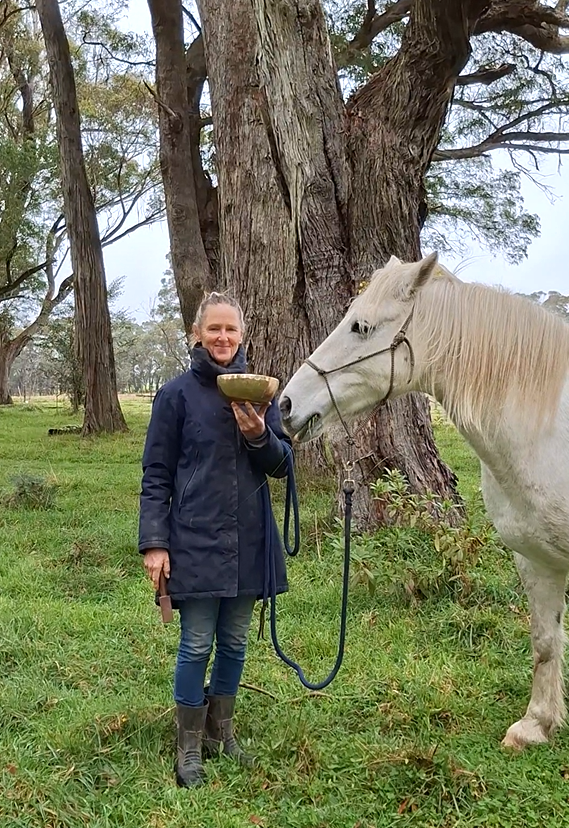

There’s a pause that happens when you step from concrete onto grass.
You probably don’t even notice it consciously. But your body does.
Your breath deepens.
Your shoulders drop half an inch.
Something in your nervous system relaxes.
We weren’t built for indoor/city life. The fluorescent lights, the screen glare, the constant hum of traffic and notifications. Our bodies don’t know what to do with 90% of our time spent indoors, our nervous systems stuck on high alert, wondering why anxiety and burnout feel like the new normal.
Stress-related illness is now one of the leading health burdens globally. Anxiety and depression aren’t outliers anymore. They’re epidemic.
And while traditional therapy has its place – medication, apps, clinical sessions – more people are starting to remember something we’ve always known but somehow forgot.
We heal when we return to a relationship with the living world.
This isn’t wishful thinking or woo. The science backs it now. Measurable. Documented.
Evidence-based medicine catching up to what your body already knows when you stand under open sky, sit under a tree, or rest your hand on a horse’s warm shoulder.
This is natural medicine. And it might be one of the oldest, most effective interventions we’ve spent the last century trying to replace with indoor solutions.
Why Humans Are Wired to Heal in Nature
Back in 1984, a Harvard biologist named E.O. Wilson introduced this concept called biophilia – basically the idea that humans have this innate, genetic pull toward other living things. Our attraction to green spaces, water, animals, open landscapes? It’s not just preference. It’s evolutionary wiring.
Think about it. We evolved outdoors in nature. For thousands of years, survival meant reading weather patterns, animal behaviour, seasonal shifts. Our nervous systems developed in constant relationship with natural rhythms.
So when we sever that connection, we don’t just miss the view. We lose access to something foundational—a source of regulation, coherence, wellbeing that our bodies actually depend on.
The research is calling chronic nature deficiency a legitimate health risk now. Studies link lack of natural exposure to increased anxiety, depression, attention challenges, cardiovascular disease, even type 2 diabetes.
When you spend time in natural environments, four things happen in your body – measurably:
- Cortisol drops (that’s your primary stress hormone)
- Blood pressure lowers
- Heart rate variability improves (a key marker of nervous system resilience)
- Immune function strengthens
This is why nature is increasingly being called the seventh pillar of lifestyle medicine – right alongside nutrition, movement, sleep, stress management, and social connection. Daily nature exposure isn’t a nice-to-have anymore.
The body knows. It’s fundamental.
What Actually Happens to Your Body in Nature
Let’s get more specific.
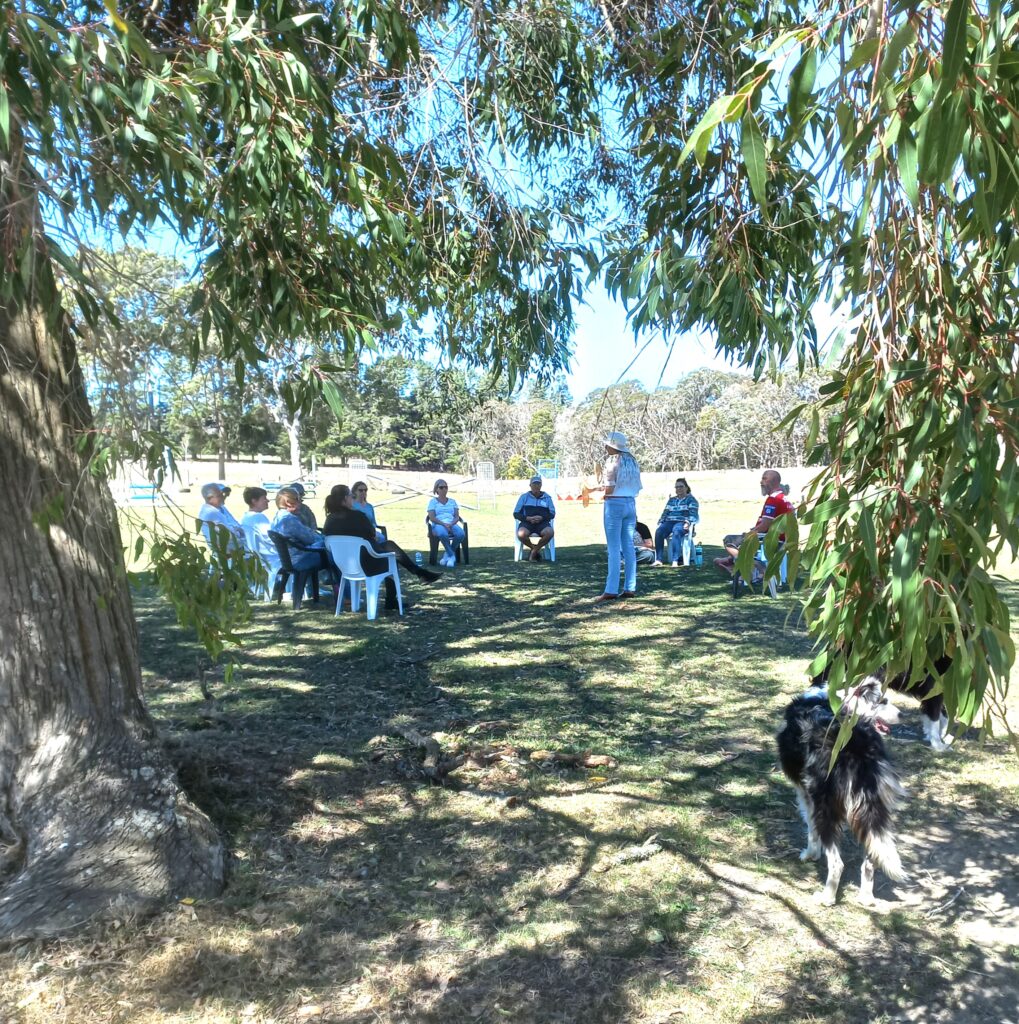
When you walk into a forest, a paddock, a stretch of bushland, your body starts shifting … whether you notice it or not.
A 2021 systematic review looked at 22 studies and found that cortisol levels were significantly lower in people exposed to nature or forest environments compared to urban settings – both before and after intervention (International Journal of Environmental Research and Public Health).
Not subtle. Measurable. Replicable.
Your nervous system moves from sympathetic dominance (that’s fight, flight, freeze) into parasympathetic activation (rest and digest).
This is where healing happens.
Where repair happens.
Where your body finally remembers it’s safe.
In Japan, they’ve formalised this as shinrin-yoku – forest bathing. You don’t hike. You don’t exercise. You certainly don’t set goals. You just spend time among trees.
The results? Decades of research showing reduced stress biomarkers, improved mood, better sleep, enhanced immune response.
One study found that spending just 20 minutes in nature lowers stress hormone levels (Frontiers in Psychology, 2019).
Twenty minutes. Less than a lunch break. Probably even less than morning tea or smoko.
But here’s what I notice in my work: nature doesn’t just calm the body. It creates space for the kind of self-awareness that’s really hard to access in chaotic, overstimulating environments.
Clinical literature describes nature as a safe space; less socially demanding, less hierarchical, less overwhelming than indoor clinical settings. It lets people drop their defenses. Feel. Reflect. Reconnect with parts of themselves that have gone quiet.
This is why nature works not just as a backdrop for therapy, but as an active therapeutic partner.
Ecotherapy: When Nature Becomes the Treatment
Ecotherapy – lso called nature-based therapy or green therapy—is the formal integration of natural environments into mental health care. It recognises something crucial: healing doesn’t happen in a vacuum.
The environment matters. The body matters. The relationship between them matters deeply.
Ecotherapy includes practices like forest bathing, mindful walking, wilderness immersion, therapeutic gardening, working with animals.
It’s grounded in this understanding that humans are ecological beings. We exist within systems, not separate from them.
Healthcare providers are now issuing nature prescriptions. Actual formal recommendations for time outdoors to address chronic disease, mental health challenges, sedentary lifestyles. In Scotland, doctors can prescribe nature time through the NHS.
In Australia, programs through Parks Victoria and Nature Play SA are integrating nature access into public health strategy.
I’ve watched ecotherapy support people navigating trauma recovery, anxiety, depression, PTSD, nervous system dysregulation. It works partly because it shifts the traditional power dynamic.
In nature, there’s no desk, no clipboard, no clinical authority.
There’s earth, sky, breath, presence. The relationship becomes more equal. More collaborative. More human.
And here’s the thing—ecotherapy is reciprocal. When you care for land, tend to animals, or simply witness the intelligence of a living system, you’re not just receiving. You’re participating.
You’re in a relationship.
That matters more than most clinical models acknowledge.
Why Horses Are Unlike Any Other Healing Partner
Horses don’t speak. They don’t analyse. They won’t offer advice or try to fix you.
And yet… something shifts in their presence.
Horses are prey animals with nervous systems designed to detect threats and read energy with extraordinary sensitivity. They live entirely in the present moment. They communicate through breath, posture, proximity, presence—never words.
Because of that, they reflect back what you’re carrying, often before you’re conscious of it yourself.
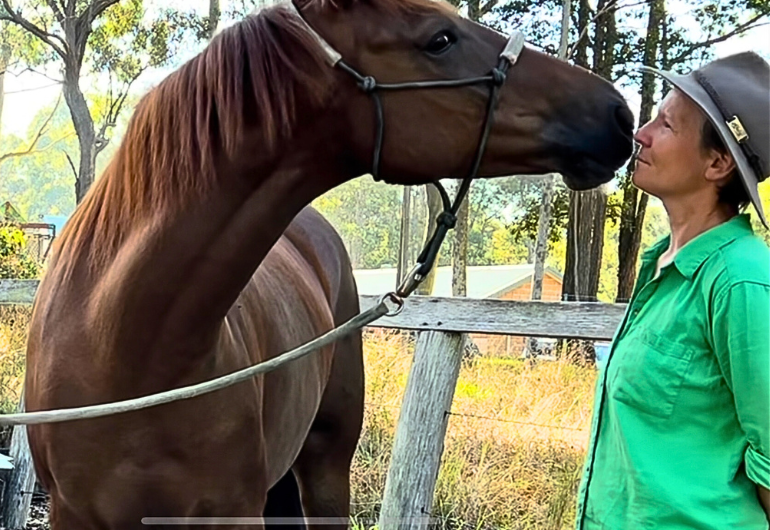
I’ve worked alongside horses for decades now, and this is what makes them uniquely powerful: when you stand beside a horse, your nervous system and theirs begin to communicate.
Research shows that physical proximity to horses can reduce cortisol while increasing oxytocin—the hormone associated with bonding, trust, calm (Human-Animal Interaction Bulletin, 2020). This process, called co-regulation, lets your body borrow the horse’s steadiness. Their groundedness. Their coherence.
Horses act as biofeedback partners.
If you’re holding tension, rushing, disconnected—they’ll respond. Sometimes by moving away. Sometimes by becoming restless. Sometimes by simply meeting your eyes with quiet knowing.
If you soften, breathe, become present—they often mirror that shift. They meet you where you are. And in doing so, they help you notice where you are.
This kind of immediate, nonverbal feedback can’t be replicated in traditional talk therapy. While I’m a registered counsellor, I’ll be honest: talk therapy doesn’t work for healing trauma.
We have to get out of the brain and into the body to find healing.
Equine-assisted work supports people navigating PTSD, anxiety, depression, trauma, emotional dysregulation, challenges with self-worth and communication. The benefits don’t just happen in the moment; they continue long after the session has ended. People report improved confidence, clearer boundaries, better emotional regulation, and a deeper sense of peace in everyday life.
And you don’t need to ride. Ground-based work, simply being with the horse is where the deepest connection happens. This isn’t about control or performance.
It’s about relationships. Presence. Attunement.
In 2025, outdoor equine therapy was identified as one of the year’s key wellness trends, recognition that combining nature exposure with animal connection offers something clinical rooms simply can’t.
The horses already know what the research is catching up to: healing happens in relationships. And sometimes the safest relationship to begin with is one that asks nothing of you but to breathe, be honest, and stay.
Learn more about our equine-assisted healing sessions →
Healing in the Heart of New South Wales
New South Wales offers some of the most restorative landscapes in Australia. Rolling pastoral country in the Southern Highlands. Eucalyptus-scented bushland. River valleys. The foothills of the Snowy Mountains.
This is land that invites slowness. Depth. Presence.
These environments naturally deliver what researchers call restorative conditions—enough sensory richness to engage the senses, enough spaciousness to let the nervous system settle, enough ecological integrity to remind your body it’s part of something larger.
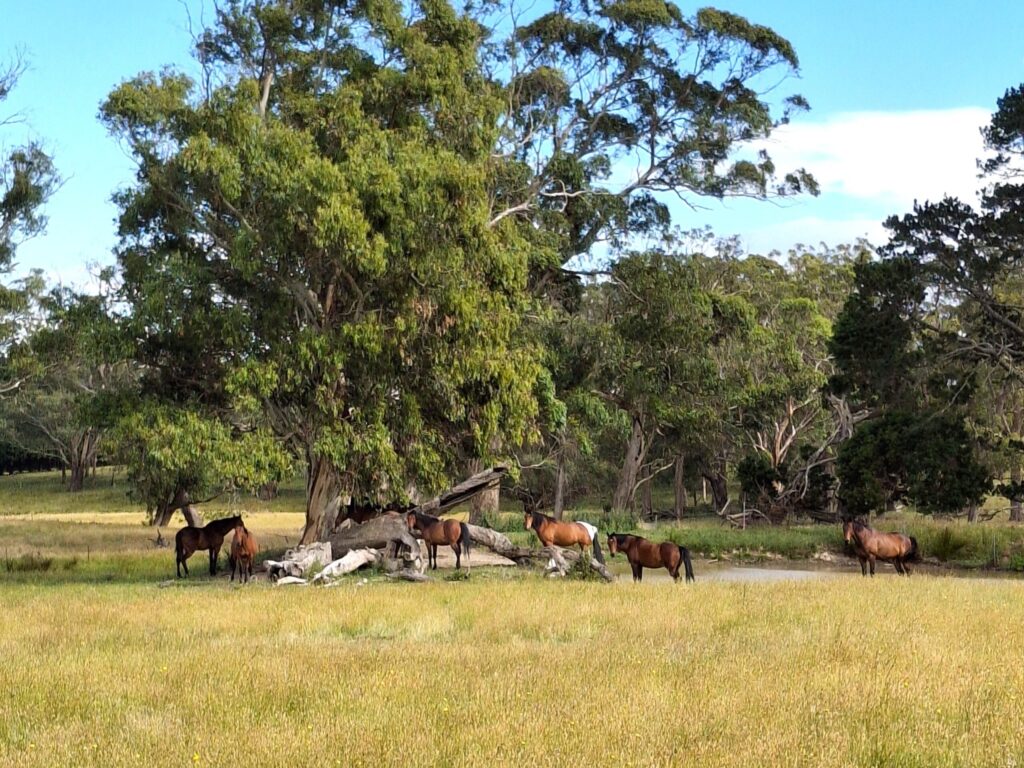
The scent of eucalyptus. Magpies calling at dawn. Light moving across a paddock. Horses grazing quietly under the open sky.
These aren’t decorative details. They’re the compound conditions that allow regulation, repair, reconnection to occur.
Mental health and healing retreats across NSW are increasingly drawing on nature immersion as core therapeutic work—not as an add-on, but as foundational. Programs integrate breathwork, mindfulness, somatic practices, and animal connection within these living landscapes.
The environment itself is medicine.
At Highlands Centre for Healing, all of this converges. The land. The horses. The spaciousness to move at your own pace. The invitation to return to yourself—not through effort or analysis, but through presence, breath, relationship with what’s already here.
Is a Nature Retreat Right for You?
You don’t need a diagnosis. You don’t need to have everything figured out.
You just need to notice if something in you is asking for a different kind of support.
A nature-based healing retreat might be for you if:
- You’re navigating burnout, chronic stress, workplace overwhelm
- You’re recovering from trauma, grief, a major life transition
- You feel disconnected from your body, your intuition, yourself
- Traditional talk therapy helped but you sense there’s more
- You’re tired of screens, noise, the relentless pace
- You want to rebuild trust in yourself, clarify boundaries, reconnect with what matters
- You’re curious about working with horses, even if you’ve never been near one
No horse experience required. This work isn’t about riding or managing animals.
It’s about presence. Attunement. Being met exactly where you are.
Often clients don’t even know what they’re seeking when they arrive. They just feel… drawn. An inner knowing.
What I’ve found is they’re people who’ve stepped off the trauma merry-go-round and know there’s a way of being that feels lighter, clearer, more whole.
What to Expect at a Nature Healing Retreat
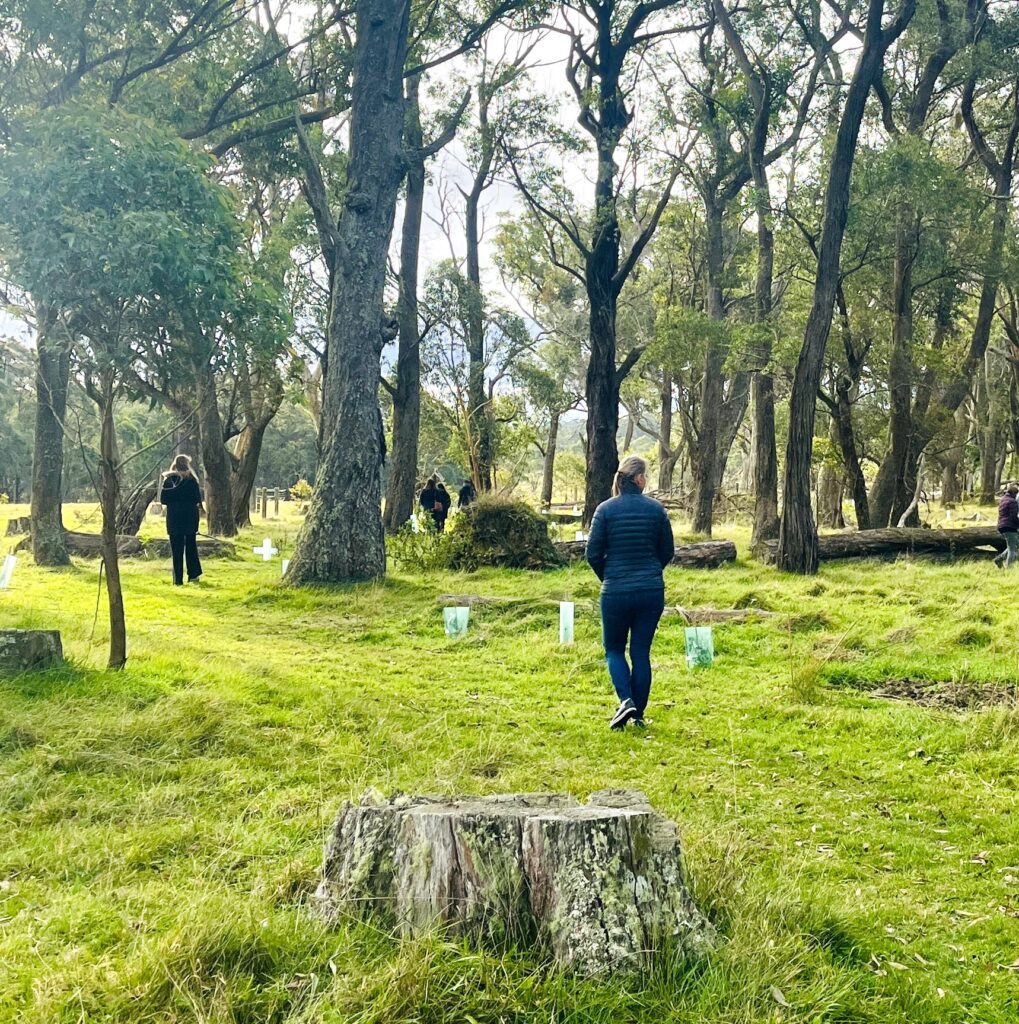
Imagine waking to birdsong instead of an alarm. Walking barefoot through dewy grass. Breathing air that smells of eucalyptus and earth.
A day at a nature-based healing retreat might look like this:
- Morning: A slow walk through paddocks. Breathwork or guided stillness under open sky. Time to simply be, without agenda.
- Time with horses: Ground-based sessions facilitated with care and attunement. Together you find rhythm, safety, presence.
- Reflection: Journalling in the quiet. A one-on-one conversation held gently, without pressure. Space to notice what’s moving in you.
- Afternoon: Rest. A walk. Sitting beneath a tree with nothing to do and nowhere to be.
- Evening: Nourishing food. Gentle connection with others if that feels right. Stillness as the sun sets. Perhaps sound, story, or simply silence.
It’s usual for guests at HCFH to notice a significant shift even after a single overnight stay. They feel more grounded, have described it as a ‘nervous system reset’ and have shared they are able to think calmly in a way they haven’t for a very long time.
Throughout all of it your nervous system is unwinding. Cortisol dropping. Oxytocin rising.
The body remembering what it’s like to feel safe.
Humans evolved in nature. It’s where our nervous systems belong and why we feel most at home there.
Your Healing Doesn’t Have to Wait
Nature medicine isn’t a trend. It’s not alternative or fringe.
It’s a return to what humans have always known: we heal in relationship with the living world.
The science confirms what your body already senses when you step onto grass, breathe open air, and stand beside a horse. The research is clear. The mechanisms are measurable. The outcomes are real.
But more than that—you already know.
Something in you remembers. That’s why you’re still reading.
Learning how to pause is one of the most important things we can learn. Do life one breath at a time.
Your nervous system already knows the way. Let the horses, the land, and the spaciousness of this place help you find it again.
Nothing needs fixing. Everything is possible. Love is the answer.
Highlands Centre for Healing offers nature-based, horse-assisted healing in the Southern Highlands, NSW. Ground-based. Trauma-informed. Held with presence, at your pace, with deep respect for what your body already knows.
You don’t need to have it figured out. You just need to begin.