

Constantly keeping busy can be a trauma response.
When stillness feels unsafe, staying busy becomes a way to avoid painful feelings, memories, and sensations we are not yet ready to meet.
It is a highly intelligent survival strategy, not a flaw.
Over time, though, it can quietly cost us, and gentle, supported stillness is how the healing begins.
Keeping busy is much like any other way we numb: alcohol, food, a phone that never leaves our hand. Not because we are weak, but because all of them do the same quiet job.
They help us avoid.
But avoid what?
The painful memories, the feelings, the unresolved things that live in the body long after the moment has passed.
First, what do I mean by trauma?
Trauma is anything that put your system into overwhelm.
And I emphasise your, because we are all different. What overwhelms one of us will not necessarily touch another. Trauma is not measured by the size of the event. It is measured by what it did to your nervous system.
When we keep busy, we distract ourselves. We fill the downtime, the quiet parts of the day, where the difficult thoughts and feelings might otherwise rise. Underneath it is often a simple, tender thing: an inability-, not yet at least -, to sit with the sensations in our own bodies.
Why staying busy makes such good sense
Keeping busy is an intelligent coping mechanism, in the same way other numbing habits are.
It works.
For a while, it takes the edge off the anxiety. It gives us a sense of control when everything inside feels uncontrollable.
There is nothing to be ashamed of in that. Your system reached for what helped.
But the same strategy that protects us can also, over time, keep us from the very thing we long for.
Constant busyness can lead to burnout, chronic stress, physical symptoms, and a slow disconnection from our own emotional needs.
It can delay true healing, because trauma that is never given space is never fully processed. And so we stay one step removed from the calm, joyful, spacious life we are reaching for.
Signs your busyness might be more than a full life
There is nothing wrong with a full, rich life. This is about something a little different: busyness as armour. You might notice it if:
- Stillness makes you uneasy, and you rush to fill it.
- Rest brings guilt, or a restless sense that you should be doing something.
- You reach for tasks, your phone, or your to-do list when a hard feeling surfaces.
- You move from one thing to the next without pausing, then wonder why you are so tired.
- Slowing down feels less like relief and more like a threat.
If you recognised yourself there, be gentle. Recognition is not a failing. It is the beginning of choice.
Where busyness fits among the trauma responses
Many of us know the phrase “fight or flight.” The body actually has four common protective responses: fight, flight, freeze, and fawn.
- Fight: meeting a perceived threat with anger or control.
- Flight: escaping it, through movement, distraction, or constant doing.
- Freeze: going still, numb, or far away.
- Fawn: keeping the peace and over-giving to stay safe.
Compulsive busyness, and what is often called workaholism, usually lives in flight, and sometimes fawn. We outrun the feelings by staying in motion, or we bury ourselves in doing for others so we never have to turn toward ourselves. It looks productive from the outside. Inside, it can be a way of not stopping long enough to feel.
How to begin slowing down, safely
If busyness has been keeping you safe, please do not tear it away all at once. Stillness that comes too fast can feel like the floor giving way. Gentleness is necessary.
We need to allow space, time, and stillness for the body to catch up. And we need supportive people and places to hold us while we process what once hurt us. When we have lived unable to fully cry, or reach real joy, or express anger cleanly, or admit fear, we pile up layer upon layer of trapped energy, trapped emotion, trapped sensation. Healing begins when we slowly learn to allow those energies, and let them move.
In trauma recovery, balance is everything. We make space, a little at a time, to feel the sensations in the body. Sitting with them can be uncomfortable, sometimes painful. But no sensation, no wave of energy that moves through you, lasts forever. It rises, and it passes.
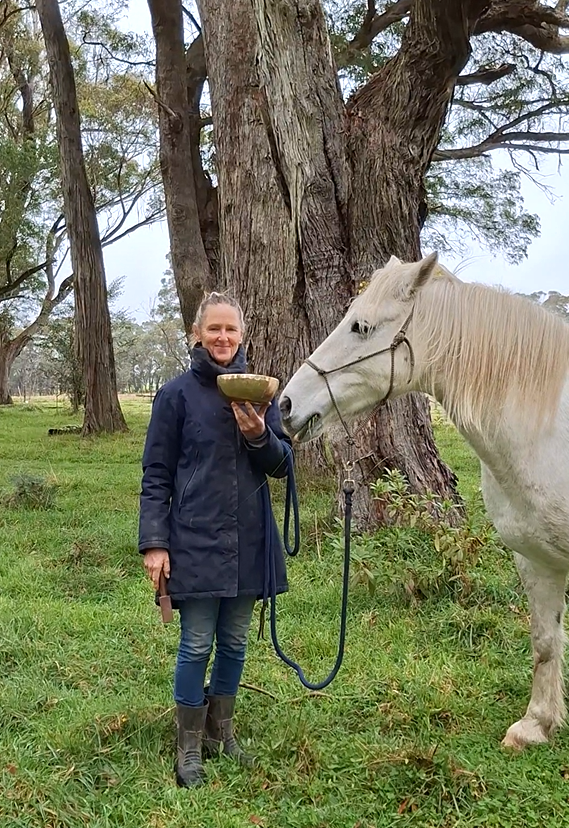
This is why the stillness is safest when it is shared. Set in nature, which so beautifully supports the nervous system, our equine-assisted healing with the herd offers exactly that kind of held, unhurried space. The horses do not ask you to perform or explain. They simply meet you, and somehow that makes the pausing possible.
You do not have to process your trauma alone
When we face the journey through trauma, it is common to feel we must carry it by ourselves. The thought of those big feelings can bring fear.
But you do not have to navigate these waters alone, and a good, trauma-aware practitioner will not let you meet overwhelm again unheld.
I offer this kind of support here at Highlands Centre for Healing. Set in nature, with the horses and the land as partners in the work, sessions are always paced to you and what your body is ready for. I am here when you are ready to gently begin.
Whenever the time feels right, you are warmly welcome to explore our wellness retreats and gatherings.
If this stirs something heavy: In Australia, Lifeline is available any time on 13 11 14, and Beyond Blue on 1300 22 4636. There is no need to wait until things feel unbearable to reach out.
Frequently asked questions
Is constantly staying busy a trauma response?
It can be. When stillness feels unsafe, staying busy becomes a way to avoid painful feelings and memories. It is an intelligent protective strategy rather than a flaw, though over time it can lead to burnout and disconnection.
Is workaholism a trauma response?
For many people, yes. Overworking can be a form of flight, a way to stay in motion so difficult feelings never quite catch up. It is worth meeting with compassion rather than judgement.
What are the four trauma responses?
Fight, flight, freeze, and fawn. They are the nervous system’s automatic ways of trying to keep you safe. Busyness most often sits within flight, and sometimes fawn.
How do I stop keeping busy to avoid my feelings?
Gently, and ideally with support. Rather than forcing stillness, begin by allowing small, safe moments of pause, and let a trusted person or practitioner hold space with you as feelings surface. The goal is not to stop living fully, but to stop running.
About the Highlands Centre for Healing
We offer holistic wellbeing for mind, body and soul bringing together a range of alternative, complementary wellbeing practices united by one single intention – to help you heal and find wellness. Join us for community or corporate group programs, workshops and retreats, or private equine therapy experiences.