

Most of us are very good at carrying on. We push through the tired days, override the tight chest, and keep going long after the body has started asking us to slow down. The body keeps the score quietly, and a lot of that score is kept by one long, wandering nerve.
The vagus nerve runs from the base of your brain down through your throat, heart, lungs and gut. It is the main pathway your body uses to come back to calm after stress. When it is working well, you settle after a hard day. When it has been overworked for a long time, settling becomes harder, and rest stops doing what it used to.
The good news is that you don’t need anything clinical or complicated to support it. The vagus nerve responds to the oldest, simplest things: breath, movement, food, nature, and being near others who feel safe. None of this is about forcing your body to relax. It is about gently offering it the conditions it needs to remember how.
What the vagus nerve actually does
Think of the vagus nerve as the body’s brake pedal. Your stress response is the accelerator that gets you moving when you genuinely need to act. The vagus nerve is what lets you ease off again afterwards.
When that brake is responsive, your heart rate softens, your digestion settles, your breathing deepens, and your body knows it is safe. The strength of that braking response is sometimes called vagal tone, and emerging research suggests it can be gently strengthened over time, much like any other capacity in the body. The practices below are simply ways of giving it that practice.
How to heal the vagus nerve naturally
1. Slow your breathing, especially the out-breath
Breath is the most direct line you have to the vagus nerve. You don’t have to breathe in any special or complicated way. The shift happens when you let the out-breath become longer than the in-breath.
Try breathing in for a count of four, then letting the breath out slowly for a count of six or more. The longer exhale is the part that tells your body the danger has passed. A few minutes of this before sleep can begin to move you out of high alert and into something steadier.
And if your mind wanders off mid-count, that’s fine. You are not trying to empty it, only to give your nervous system the same quiet signal, again and again, that it is safe to come down.
2. Move gently and let the body soften
Movement that combines breath with slow, mindful motion is especially kind to the vagus nerve. Yoga is one obvious path, but so is a slow stretch in the morning, or simply rolling the shoulders and lengthening the neck where so much tension tends to gather.
Gentle, hands-on touch helps too. A massage, or even slow self-massage around the neck and the base of the skull, can soothe the nerve through pressure and warmth. None of it is about pushing or achieving. You are letting the body unclench at its own pace.
Humming and singing belong here as well. The vagus nerve passes close to the vocal cords, so a low hum in the car or a song while you cook is doing quiet work without you thinking about it.
3. Spend time outdoors and let your body move in it
Regular, unhurried movement supports the whole nervous system. A brisk walk, a swim, a cycle, anything that gets the body moving and lifts the mood, helps your system regulate itself.
What makes the biggest difference is often where you do it. Being outdoors does quiet work on the body that a treadmill indoors rarely matches. Open space, fresh air, the rhythm of walking on uneven ground, the absence of demand. The body recognises something old in it and begins to settle, and the movement does the rest.
4. Eat in a way that calms the body
What you eat shapes the environment your nervous system lives in. Foods that calm inflammation tend to support vagal function, while a constantly inflamed body keeps the system on edge.
You don’t need a strict regime. Leaning towards whole foods, plenty of vegetables, oily fish like salmon, and sources of healthy fats such as nuts, seeds and flaxseed gives the body steadier ground to work from. A settled gut and a settled nervous system are closely linked, and they tend to support each other.
5. Let yourself be with others, and let yourself laugh
This is the one most of us overlook, and it may be the most powerful of all. Our nervous systems are not designed to regulate in isolation. They settle most easily in the presence of other calm, safe bodies. This is called co-regulation, and it is happening all the time, far below conscious thought.
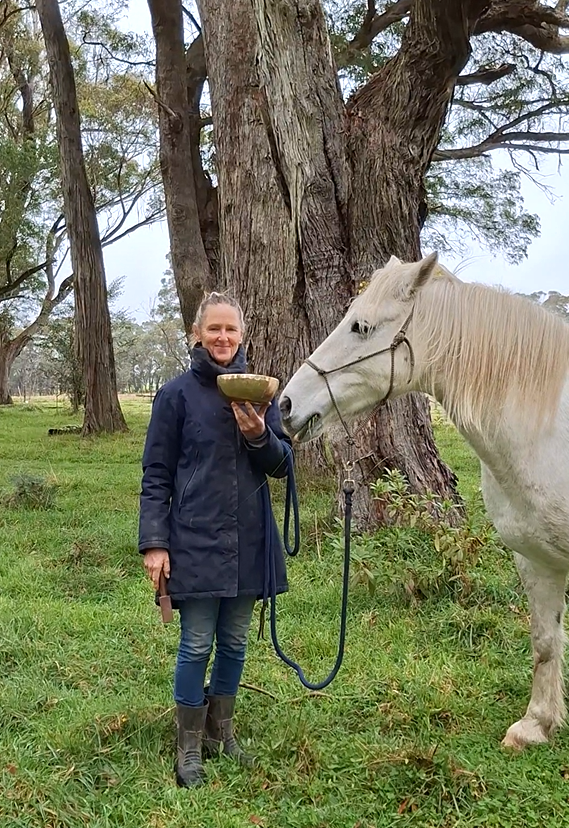
Real laughter, easy conversation, a long unhurried meal with people you trust, all of these gently tone the vagus nerve and lift the body out of stress. The same is true with animals. Standing quietly beside a horse who is grazing, close enough to hear the steady tear and chew of grass and the long sigh they let out when they settle, many people feel their own breathing slow and their shoulders drop without trying to do anything at all. The horse is simply being calm, and the body borrows that calm.
If your days have left you isolated, or always cast as the strong one holding everyone else together, this is worth taking seriously. Connection is not a luxury for the nervous system. It is one of the main ways it heals.
How do I know if my vagus nerve needs support?
You don’t need a diagnosis to notice when your body is running on high alert. It tends to show up in everyday ways: trouble winding down at night, a gut that feels unsettled, a racing or fluttering heart, low mood, or a sense of being wired and exhausted at the same time. Some people don’t feel wired at all, but flat and far away instead, which is its own kind of functional freeze.
If you recognise yourself in those, you are not broken, and nothing has gone wrong with you. Your body has simply been protecting you for a long time and could use some support coming back down. We go deeper into these everyday signals in our guide to the vagus nerve symptoms most people ignore.
One honest note. If you have persistent physical symptoms, such as ongoing digestive problems, difficulty swallowing, breathing changes, fainting, or a heart rate that worries you, please see a doctor. The gentle practices here support a tired nervous system. They are not a substitute for proper medical care when your body needs it.
Supporting your nervous system at Highlands Centre for Healing
Everything on this list comes back to the same thing: safety, slowness, and the body being given permission to rest. That is the heart of the work we do at Highlands Centre for Healing, in the Southern Highlands of NSW.
Much of it happens outdoors, on the land, alongside the horses, at a pace set by you rather than by a program. For a nervous system that has been bracing for a long time, that combination of nature, gentle presence, and co-regulation can do what no amount of willpower can. If something here feels familiar, you’re warmly welcome to learn more about how we work with the herd.
About the Highlands Centre for Healing
We offer holistic wellbeing for mind, body and soul bringing together a range of alternative, complementary wellbeing practices united by one single intention – to help you heal and find wellness. Join us for community or corporate group programs, workshops and retreats, or private equine therapy experiences.